
Here are some examples of Web sites which we conceived and developed:
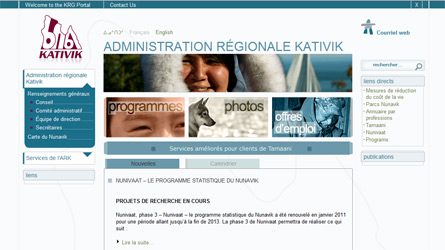
Objective: keep the public informed about the many different services provided by the Kativik Regional Government (www.krg.ca).
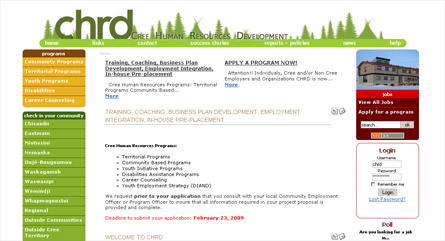
This website offers a search engine specialised for job seekers willing to work in the Cree communities (chrd.ca).
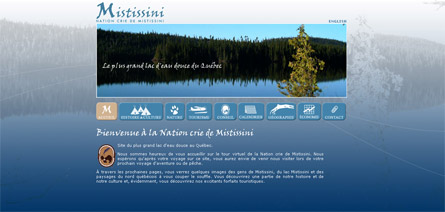
It promotes tourism and local businesses. It is particularly dedicated to demonstrate the immense beauty of the region (mistissini.ca).
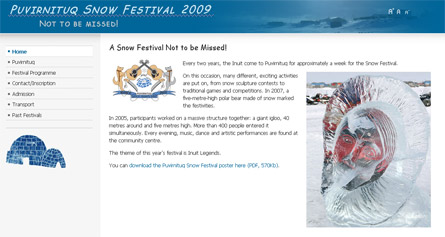
It promotes one of the most interesting annual festivals in the north. This website is sponsored by Soleica (www.soleica.ca/snowFestival).
Database development, e.g.
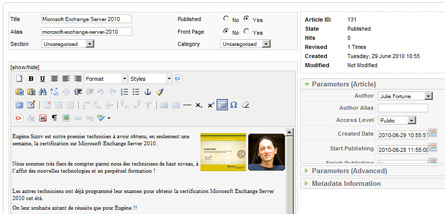
Many of the websites built by Soleica now use the content management systems Joomla! or Drupal. The idea in using a content management system (CMS) is to keep the content of a website apart from the formatting and the more technical aspects and thus to make life much easier for the persons who maintain the website’s content.
The content is stored apart from the CMS in a database. A web interface enables our clients to update the content autonomously whenever they want. They can modify existing texts, add new articles or withdraw outdated information and the CMS takes care of the rest.
Content changes are effective immediately on the website. When a web visitor goes to the website, the CMS works in the background, retrieves the latest content from the database, applies the necessary formatting and displays the content as intended by the designer.
Both content management also feature sophisticated tools to optimize a webpage for search engines such as Google or Bing (Search Engine Optimisation, SEO). An optimized website is easier to analyse by the search engines and has better chances to be found by users searching the web. This is an important thing to keep in mind, if you want to get your message transmitted to your target audience.
The Joomla! CMS gives control over every aspect of the website. Joomla! is an Open Source solution that is highly customizable and easy to use for the clients. It allows them to manage their website content remotely and without profound knowledge of the system’s internal functioning. Joomla! is highly extensible with thousands of extensions for all kind of purposes, which are provided by a huge and very active developer community.
Example